
Understanding F1 Academy: Progress, Challenges, and Misconceptions

The roar of engines, the adrenaline of a race, and the chance to watch passionate drivers chase their dreams is what motorsport is all about. It’s why we wake up at 8 a.m., why we sit through free practice sessions, and why we become invested long before the lights go out. Yet somehow, when it comes to F1 Academy, critics seem to forget why it exists in the first place. Rather than acknowledging the doors it opens for women or the visibility it brings to a sport that has long excluded them, the conversation is flooded with dismissive complaints: the cars are too slow, the drivers are too old, and the competition isn’t “real” enough.
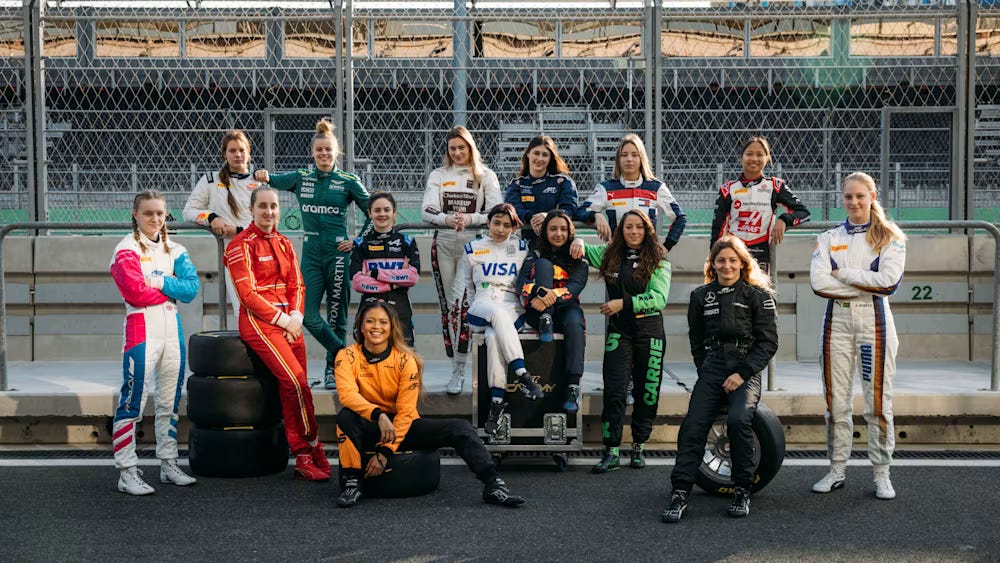
But this fixation on F1 Academy’s shortcomings completely miss the point. First, while it is important to acknowledge that much of the criticism is clearly rooted in sexism and misogyny, the conversation remains nuanced. Dismissing all criticism outright would be misleading, as it pretends the series is flawless, ignores legitimate concerns, and shuts down meaningful discussion about where it can improve. In the same way, overly simplified, all or nothing criticism does the same by stripping the conversation of nuance and context. Criticism certainly has a limit because once it overshadows the purpose and impact of the program, it stops being constructive and takes on a life of its own. Highlighting flaws is one thing; ignoring the value of the program entirely is another.
Too often, critics make sweeping, oversimplified and absolute statements about F1 Academy without engaging with the full context. Blanket statements shut down meaningful discussion, preventing us from exploring what the program does well, where it can improve, and how it contributes to broader progress in motorsport. The first common criticism is that because F1 Academy is not a direct pipeline to Formula 1, or even an immediate feeder series, the program is fundamentally flawed. Critics often see it in black-and-white terms: either results appear instantly, or the effort is dismissed entirely. But like anything meaningful, progress takes time. Even in motorsport itself, when a team uncovers a serious engineering flaw, it is rarely fixed overnight, it takes testing, patience, and careful problem-solving. Expecting F1 Academy to produce immediate outcomes ignores how the sport actually works.
Understanding the series begins with recognizing it as a work in progress rather than a finished product. Its purpose is not instant success, but the creation of a foundation that allows growth over time. Every lap these drivers complete, every interview they give, and every podium they reach contributes to this foundation. It is not only about where women are racing today; it is about the opportunities that will exist for them a decade from now. Exposure now lays the groundwork for future progress, and skipping these steps simply because they feel slow or uncomfortable would undermine the very development the series aims to foster. In just three years, the program went from struggling to find sponsors to securing backing from all the F1 teams for its drivers, and even landing notable collaborations with brands like Hello Kitty and Charlotte Tilbury.
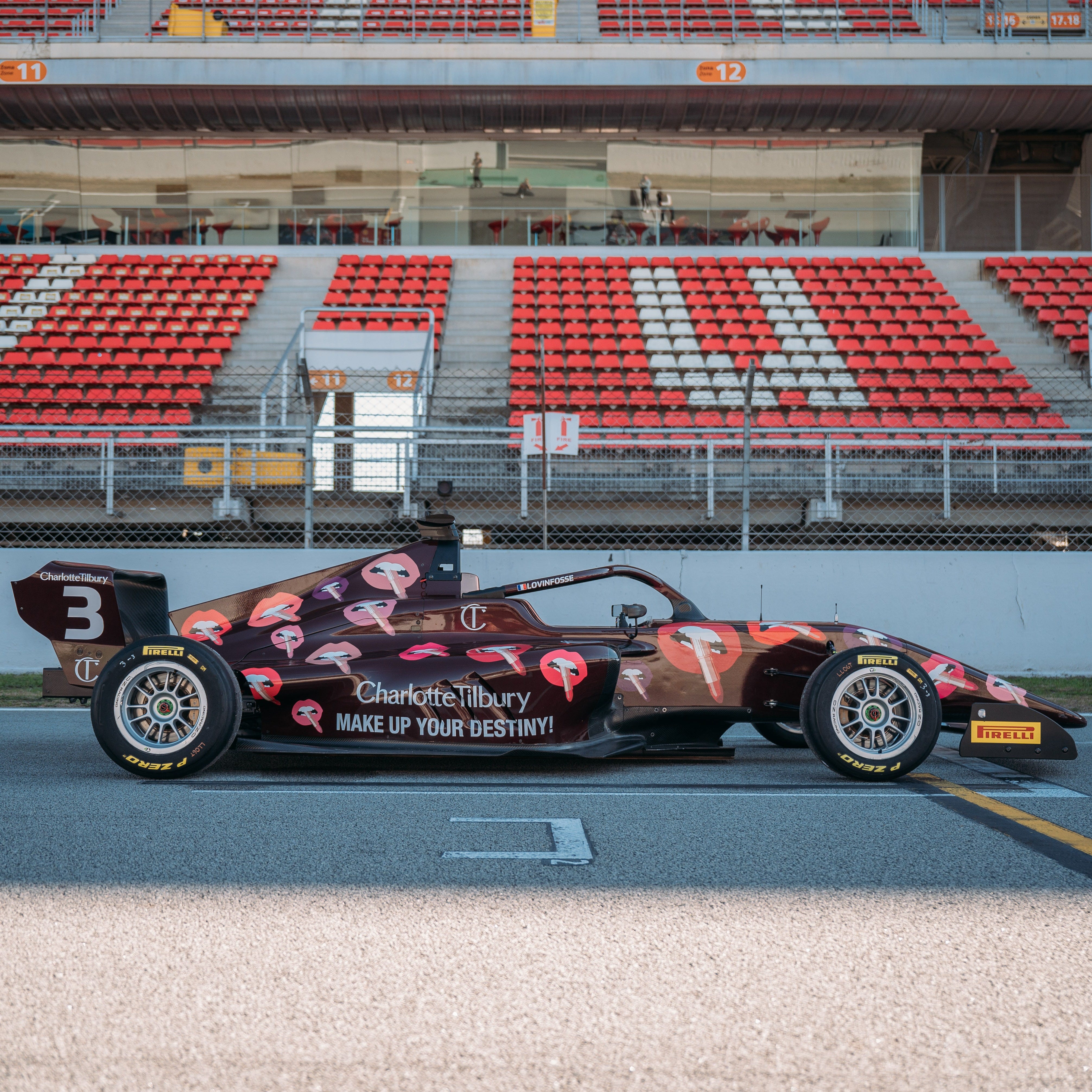
While there are multiple reasons why the program is important, one of its most significant contributions lies in the foundation it is building: a legitimate and institutionalized platform. Companies and sponsors may choose to invest in initiatives such as this, and although such support can sometimes feel superficial, the existence of F1 Academy provides something far more consequential. It establishes a structured and credible mechanism through which female drivers can receive sustained backing, giving sponsors a clear and reliable avenue to support talent in a meaningful way. Without a program like F1 Academy, it is unrealistic to assume that brands such as Tommy Hilfiger or Hello Kitty would independently invest in women in motorsport. Their support is more likely to follow an established framework rather than taking the initiative in a fragmented landscape. In this sense, F1 Academy does more than just showcase drivers, it creates the conditions for long-term visibility, funding, and career development that would be extremely difficult to achieve otherwise. By institutionalizing opportunities for female talent, it helps ensure that support is not just a one-off marketing effort, but a sustained commitment to growing the sport inclusively.
Another issue with the criticism is that it is often raised without sufficient consideration of context and highlights concerns that are not unique to the series. The most prominent concern centers on the opportunities available to graduates of the program, specifically, whether a clear and consistent pathway exists to higher levels of motorsport, or whether the series risks functioning as a limiting endpoint for some drivers. The program itself has never claimed that its goal is to place women in Formula 1 within a specific timeframe and this uncertainty is not unique to F1 Academy. For the majority of drivers in Formula 2 and Formula 3, those categories are often the highest level they will reach, with only a small fraction ever progressing to Formula 1. We could debate endlessly about how many drivers do not continue their careers beyond that, or about the insane costs associated with competing in F2 and F3. Many passionate and talented drivers are forced to leave the sport because they, or their families, cannot afford the hundreds of thousands of dollars required to compete. Yet despite these financial and structural challenges, critics rarely call for Formula 2 or Formula 3 to be dismantled.
And when we do think about what the end goal of Formula 1 looks like, it’s not just about being the fastest or standing on the top step of the podium. People often talk about Formula 1 as the pinnacle of racing, the top of the pyramid, but that doesn’t mean the levels below it aren’t important. Drivers need to develop their skills and gain experience before they can compete at that level, and that’s exactly what series like F1 Academy provide. The goal isn’t just to create future F1 stars and speed isn’t the only measure of value. It’s about learning racecraft, understanding the cars, and building the skills that matter in the long run. Acting as if these series don’t matter misses the bigger picture of how drivers grow and how the sport develops.
Additionally for some drivers, F1 Academy may represent the culmination of their racing career, and that is perfectly valid. For others, it is a valuable opportunity to pursue their passion, gain experience, or add accomplishments to their racing résumé. There is no single “right” outcome, and each path is unique. In this way, F1 Academy is no different from any other racing series—each driver uses it in the way that best supports their individual journey.
Finally there is also an ongoing conversation about media coverage as it can sometimes appear to engage in pinkwashing, highlighting the series superficially without fully capturing its significance. Online, there are often more clips of interviews and events than of the racing itself, which raises the question of whether the focus is more on the drivers’ image than on the cars or the competition, a trend seemingly driven by the media. At the same time, framing these elements as inherently negative risks creating the impression that women in motorsport are one-dimensional, as if they must choose between aesthetics and performance. However, a driver can have multiple sides to their identity. Using makeup or promoting oneself in certain ways does not diminish talent, dedication, or commitment to racing. This issue speaks to a larger societal problem, where women are often expected to fit into a single category: they are either smart or attractive, career-focused or nurturing, cold or caring. There is rarely recognition of the in-between, of the complexity and multiplicity of women’s identities.

All this said, I believe F1 Academy is important, and the conversation we have about it is even more so. It is much more than just a racing series, and we need to be able to discuss it openly in order to help it progress. Complaints without engagement achieve nothing. If people only criticize and ignore the program, they fail to contribute to improvement. True progress requires both acknowledgment of flaws and active participation in finding solutions. Ignoring the opportunities F1 Academy provides while demanding instant perfection only undermines the very progress we hope to see.
Recent Interviews
Julia Landauer
Julia Landauer knew by age 12 that she wanted to race professionally, a goal that has shaped her journey from early formula cars to the NASCAR Xfinity Series. In our interview, she spoke about the pressure of racing, what continues to inspire her, and what it’s like being a woman in a male-dominated sport. She also shared how she’s using her platform through the Shift Up Now Foundation to support the next generation of female drivers.

Mathilde Poirier
From managing race day pressure to ensuring seamless communication between engineers and mechanics, Mathilde Poirier offered an inside look at what it takes to keep a race team performing at the highest level. She reflected on how watching racing with her dad sparked her interest in motorsport, her path to becoming a System Engineer at Oreca, and what a day in her life looks like working on cars like the Ferrari 296 GT3.

Léa Sam Caw Freve
From anticipation at high speed to the trust required between driver and co-driver, Léa Sam Caw Frève shared what it truly means to compete in rallying. Coming from a motorsport family, she found her place in the sport through rally rather than karting and now balances her role as a co-driver with her career as a physiotherapist. In our interview, Léa discussed how preparation, communication, and asking for help are essential, describing the driver–co-driver relationship as one built on partnership and trust.

Breaking News
Maria Germano Neto will compete in the 2026 Spanish Formula 4 Championship with TC Racing.
Doriane Pin was announced as a Development Driver for the Mercedes-AMG Petronas F1 Team.